Monday, 19 August 2024

I love my doctor

Just to be clear: I am not in love with my doctor. I don’t feel attracted to her. We are not friends. We don’t see each other a lot. I don’t even know her that well.
Come to think of it, she is not my doctor either, in the sense of “my personal doctor”. She’s a GP in the local health centre and I am assigned to her.
I guess “love” is too strong a word. It is. “Like” should suffice.
“I love my doctor.” Preposterous.
Yet on every rare occasion I pay her a call I feel like shouting that from the rooftops.
What I actually love is her attitude. Her consistency. Her reliability. Her professionalism, after all. You can trust her. I trust her.

“Look at that,” she says. (She is browsing the printout of my biochemical analysis results and reading some numbers aloud.) “Everything is normal, or better than normal. For your age. It’s like you were,” she does some mental arithmetics here, “ten years younger.”
This instantly makes me feel — well, ten years younger.
“Except for cholesterol, that is,” she adds quickly. “Nothing to worry about though. You’ve got slightly higher cholesterol. But it’s not bad. It’s what’s called ‘good cholesterol’, look here. Not the bad one. It’s totally not bad to have a little more of the good one, if you know what I mean.”
I nod enthusiastically. I appreciate it when people explain things well.
“Maybe you ate some hard cheese the night before you had the blood test,” she goes on. “I told you not to.”

I rarely go to the doctor’s. If there is any chance for my ailment to go away on its own, I’ll take it. It usually works.

She’s not the only GP there, but she’s the one I go to. Once she was away and I got directed to another doctor. I didn’t enjoy the experience. He listened carefully but was too vague when it came to the diagnosis part.
“There are a few possibilities,” he said. “You look tired. It could be a virus,” he suggested. “A common cold. Or even a coronavirus.” He winked at me and also at a nurse who happened to be there, as if it was a giggle. (To put things into context: in two months’ time we all were locked down and nobody was joking anymore.) “Don’t worry, take it easy, have a rest, come back to see me if the symptoms persist.”

I never saw him again.

No, my doctor knows her stuff. By now I also know what she is going to tell me. That’s the purpose of my visit: to hear what I need.

This time I turn up a bit early. Perhaps ten minutes earlier than my appointment. It’s the afternoon before a public holiday. I expect to see some people waiting, but today there is nobody. The door to her office is wide open. She sits, as usual, behind her desk, staring at the computer screen. I stop in front of the door and wave at her. She waves back.
“Can I come in?” I ask.
“In a minute!” she booms. “Take a seat, will you, I’ll call when it’s your turn.”
I sit down and take out a book. I always bring something to read with me. At times, you’ve got to wait. It’s OK. This health centre provides me with time and space to read.
“Enter!” the doctor yells as soon as I open the book. “Everybody wants to go home early.”
I get up and come in.
“It’s you, isn’t it?” she asks without taking her eyes from the screen.
“Yes it’s me”, I reply, fighting the temptation to add, “How did you know?”.
One amazing thing about my doctor is her ability to read my thoughts.
“It’s here,” she points at the screen, “you’ve got an appointment, right now. What’s the problem?”
I explain. She absorbs.

Another of her superpowers is to reach a diagnosis on the basis of my explanation alone. Years ago, I volunteered to show her things: open my mouth, or take off a shirt, or some other clothing item.
“No, no, no, no,” she’d grumble from her behind-the-desk haven. “No need for that.”
So I stopped offering. With her X-ray vision she’d identify my illness all the same. Moreover, she knows what has provoked it and, by extension, my visit.

“You don’t smoke, don’t you?”
No, I don’t.
“You could have taken three cups of coffee that morning, and bam!”
She reconsiders: three cups could be too much.
“Or two.”
I shrug. I drink coffee every morning.
One more thing that’s great about her: she’s not afraid to offer alternative hypotheses.
“Or maybe you had another glass of wine in the evening.”
Sure, there are people in this country who don’t drink wine. I also heard about those who never have coffee. However, the number of people who consume neither of these beverages must be vanishingly small. At least among my doctor’s clients.
We look at each other understandingly. We don’t belong to that miserable minority.
On top of that, she smokes like a chimney.
“Here’s your prescription,” she sighs. “One pill, twice a day. Same as the last time,” she continues as if remembering the last time. (Of course, she could have just consulted her computer.)

In England, when I had a flu and my doctors — every one of them — prescribed amoxicillin and told me to take plenty of liquid, I thought them incompetent fools. Here, when my doctor tells me what I expect to hear and prescribes what I expect to be prescribed, I think she’s a genius. Because everything she promised so far turned out to be true. Don’t worry, it will go away in a week or two. And it went away.

How can she see the future? There has to be a rational explanation. Probably years and years of experience. Simple as that, although there’s nothing simple in years of experience.
“In my years of experience,” she’s doing her telepathy schtick again, “it goes away in a couple of weeks. If it doesn’t, come back.”

I look at my doctor with admiration. She doesn’t really want to see me in two week’s time. This is not bloody America. The focus is on health, not on treatment. She wants me to go away and never return. For a clinician, that would be a triumph.
The feeling is obviously mutual. I don’t want to see her again either. Not in her office, anyway.

“Thanks, doctor,” I say. “Bye.”

I leave the health centre. It’s practically empty now. One unpleasant task out of the way, I feel like flying. I feel like, like —
(see the title).

Tuesday, 30 January 2024

Weierstrass meets Kovalevsky

From Too Much Happiness by Alice Munro:

Weierstrass had no more idea than his sisters of Sophia’s age or mission. He told her afterwards that he had thought her some misguided governess who wanted to use his name, claiming mathematics among her credentials. He was thinking that he must scold the maid, and his sisters, for letting her break in on him. But he was a courteous and kindly man, so instead of sending her away at once, he explained that he took only advances students, with recognized degrees, and that he had at the moment as many of those as he could handle. Then, as she remained standing — and trembling — in front of him, with that ridiculous hat shading her face and her hands clutching her shawl, he remembered the method, or trick, he had used once or twice before, to discourage an inadequate student.
“What I am able to do in your case,” he said, “is to set you a series of problems, and ask you to solve them and bring them back to me one week from today. If they are done to my satisfaction, we will talk again.”
A week from that day he had forgotten all about her. He had expected, of course, never to see her again. When she came into his study he did not recognize her, perhaps because she had cast off the cloak that had disguised her slender figure. She must have felt bolder, or perhaps the weather had changed. He had not remembered the hat — his sisters had — but he had not much of an eye for female accessories. But when she pulled the papers out of her bag and set them down on his desk, he remembered, and sighed, and put on his spectacles.
Great was his surprise — he told her this too at a later time — to see that every one of the problems had been solved, and sometimes in an entirely original way. But he suspected her still, thinking now that she must be presenting the work of someone else, perhaps a brother or lover who was in hiding for political reasons.
“Sit down,” he said. “And now explain to me each of these solutions, every step taken.”
She began to talk, leaning forward, and the floppy hat fell over her eyes, so she pulled it off and let it lie on the floor. Her curls were revealed, her bright eyes, her youth, and her shivering excitement.
“Yes,” he said. “Yes. Yes. Yes.” He spoke with ponderous consideration, hiding as well as he could his astonishment, especially at the solutions whose method diverged most brilliantly from his own.
She was a shock to him in many ways. She was so slight and young and eager. He felt that he must soothe her, hold her carefully, let her learn how to manage the fireworks in her own brain.
All his life — he had difficulty saying this, as he admitted, being always wary of too much enthusiasm — all his life he had been waiting for such a student to come into this room. A student who would challenge him completely, who was not only capable of following the strivings of his own mind but perhaps of flying beyond them.

Thursday, 8 June 2023

I wish I had made you angry earlier

From Missed opportunities in crystallography by Zbigniew Dauter and Mariusz Jaskolski:

The only method to avoid mistakes and errors is to do nothing. We have no intention whatsoever to criticize the founders of crystallography for their omissions or errors. On the contrary, the faults of some of them usually help to emphasize the achievements of others and, as a net total, illustrate the immense intellectual activity of our predecessors, even if it is measured by the inevitable fraction of lapses.
What Lindo Patterson overlooked initially was soon realized by David Harker. <...> Lindo Patterson later admitted: ‘I must say that I was very annoyed at myself for missing the beautiful extension of the method made by Harker’. The great man did not hold any grudges and wrote in a letter to Harker: ‘Mr Harker, I’m so glad you pointed this out to me. If I could only have thought a little more, I’d have seen this myself before you did. I could have kicked myself’.
It sounds like a joke of history that Pauling illustrated the α-helix (which is of course right-handed) with left-handed chirality, arbitrarily assuming the wrong configuration of the Cα atoms. Apparently, he did not pay much attention to the problem of absolute configuration, which is odd in view of his deep concern with stereochemistry.
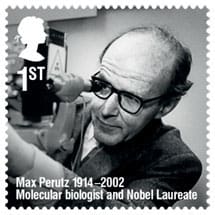
When Perutz read the paper of Pauling and Corey about the α-helix, he instantly understood, with fury, his mistakes but also realized that there should be another strong meridional reflection at 1.5 Å, to represent the chemical repeat (a single amino acid residue) along the helix axis. Observation of this reflection (at relatively high resolution) required a special diffraction experiment, and he feverishly made it. The photograph confirmed the model of Pauling and Perutz’s own belated revelation. When W. L. Bragg asked Perutz what sparked his experiment, he said: anger about his earlier omission. The reply of Bragg was, ‘I wish I had made you angry earlier!’

Thursday, 6 October 2022

woman, the scientist

From The Dawn of Everything by David Graeber and David Wengrow:

We can be fairly certain there was no Neolithic equivalent of Edmund Cartwright or Thomas Edison, who came up with the conceptual breakthrough that set everything in motion. Still, it often seems difficult for contemporary writers to resist the idea that some sort of similarly dramatic break with the past must have occurred. In fact, as we’ve seen, what actually took place was nothing like that. Instead of some male genius realizing his solitary vision, innovation in Neolithic societies was based on a collective body of knowledge accumulated over centuries, largely by women, in an endless series of apparently humble but in fact enormously significant discoveries. Many of those Neolithic discoveries had the cumulative effect of reshaping everyday life every bit as profoundly as the automatic loom or lightbulb.
Every time we sit down to breakfast, we are likely to be benefiting from a dozen such prehistoric inventions. Who was the first person to figure out that you could make bread rise by the addition of those microorganisms we call yeasts? We have no idea, but we can be almost certain she was a woman and would most likely not be considered ‘white’ if she tried to immigrate to a European country today; and we definitely know her achievement continues to enrich the lives of billions of people. What we also know is that such discoveries were, again, based on centuries of accumulated knowledge and experimentation — recall how the basic principles of agriculture were known long before anyone applied them systematically — and that the results of such experiments were often preserved and transmitted through ritual, games and forms of play (or even more, perhaps, at the point where ritual, games and play shade into each other).
Gardens of Adonis’ are a fitting symbol here. Knowledge about the nutritious properties and growth cycles of what would later become staple crops, feeding vast populations — wheat, rice, corn — was initially maintained through ritual play farming of exactly this sort. Nor was this pattern of discovery limited to crops. Ceramics were first invented, long before the Neolithic, to make figurines, miniature models of animals and other subjects, and only later cooking and storage vessels. Mining is first attested as a way of obtaining minerals to be used as pigments, with the extraction of metals for industrial use coming only much later. Mesoamerican societies never employed wheeled transport; but we know they were familiar with spokes, wheels and axles since they made toy versions of them for children. Greek scientists famously came up with the principle of the steam engine, but only employed it to make temple doors that appeared to open of their own accord, or similar theatrical illusions. Chinese scientists, equally famously, first employed gunpowder for fireworks.
For most of history, then, the zone of ritual play constituted both a scientific laboratory and, for any given society, a repertory of knowledge and techniques which might or might not be applied to pragmatic problems.

Thursday, 8 September 2022

this natural forest

From The Man Who Planted Trees by Jean Giono:

illustration by Simona Mulazzani
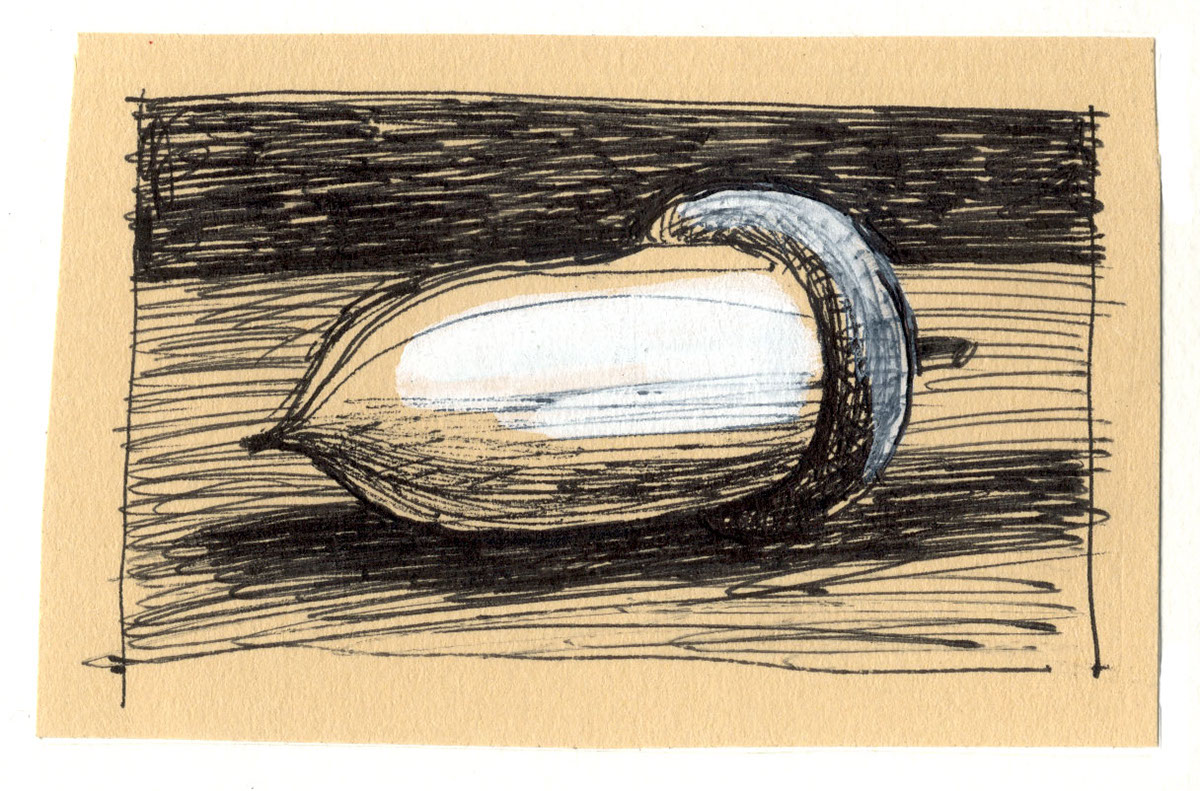
En 1933, il reçut la visite d’un garde forestier éberlué. Ce fonctionnaire lui intima l’ordre de ne pas faire de feu dehors, de peur de mettre en danger la croissance de cette forêt naturelle. C’était la première fois, lui dit cet homme naïf, qu’on voyait une forêt pousser toute seule.
En 1935, une véritable délégation administrative vint examiner la «forêt naturelle». Il y avait un grand personnage des Eaux et Forêts, un député, des techniciens. On prononça beaucoup de paroles inutiles. On décida de faire quelque chose et, heureusement, on ne fit rien, sinon la seule chose utile: mettre la forêt sous la sauvegarde de l’Etat et interdire qu’on vienne y charbonner.
En 1933 recibió la visita de un guarda forestal atónito. El funcionario le notificó la orden de no encender fuego al aire libre, con el fin de no poner en peligro el crecimiento del bosque natural. Era la primera vez, le dijo ese hombre ingenuo, que un bosque crecía por sí solo.
En 1935, toda una delegación administrativa fue a examinar el bosque natural. Había un alto cargo de Aguas y Bosques, un diputado y varios técnicos. Pronunciaron muchas palabras inútiles. Decidieron hacer algo y, afortunadamente, no hicieron nada, salvo la única cosa útil que podían hacer: poner el bosque bajo la protección del Estado y prohibir que se cortara leña para convertirla en carbón.
In 1933 he received the visit of an astonished forest ranger. This functionary ordered him to cease building fires outdoors, for fear of endangering this natural forest. It was the first time, this naive man told him, that a forest had been observed to grow up entirely on its own.
In 1935, a veritable administrative delegation went to examine this “natural forest”. There was an important personage from Waters and Forests, a deputy, and some technicians. Many useless words were spoken. It was decided to do something, but luckily nothing was done, except for one truly useful thing: placing the forest under the protection of the State and forbidding anyone from coming there to make charcoal.
El hombre que plantaba árboles
(translated by Palmira Feixas)
The Man Who Planted Trees
(translated by Peter Doyle)

Friday, 18 March 2022

In memoriam: A. M. Shkrob (1936 — 2007)

Как долго помнят о тех, кто никому не известен при жизни? Что значит — никому?
А. М. Шкроб, «Счастливые дни»
How long do they remember those who are known to no one during their lifetime? And what does it mean — “no one”?
A.M. Shkrob, Happy Days

What prompted me to look up his name after all these years, I can’t tell now. The top hit Mr Google brought me was an article in Russian Wikipedia from which I learned that the subject of my search, Alexander Moiseyevich Shkrob (Александр Моисеевич Шкроб), Ph.D., died almost 15 years ago, on 28 September 2007, under suspicious circumstances. At the same time, the article was marked for deletion. It was noted in the discussion that A.M. Shkrob does not satisfy Wikipedia’s notability criteria for scientists. What?

I felt compelled to fix this. One of such criteria is peer-reviewed publications in “leading research journals”, wherever they are supposed to “lead”. To compile a list of A.M.’s scientific papers was relatively straightforward. Far from being complete, it nevertheless gives an idea how broad his research interests were. I also included there the monograph «Мембрано-активные комплексоны» [3] which Shkrob coauthored with Yuri Ovchinnikov and Vadim Ivanov. (I used to have a physical copy of this book which I bought second-hand in the 1980s.) I’ve added the bibliography to the Wikipedia article; you can see it at the end of this post, just in case they mutilate or delete it.

While doing this, I found out something unexpected. In 1997, A.M. created the web site called Vivos voco!* that is still online. Which in itself is a miracle, considering that it is a free — in many senses of this word, including advertisement-free — library. (For how long now, considering what is happening with the Internet in my fatherland?) Browsing this refreshingly simple, very 1990s-style site, I discovered the papers that A.M. wrote for popular science journals such as «Знание — сила» (Scientia potentia est) and «Химия и жизнь» (Chemistry and Life) in the ’80s and ’90s. I didn’t know this side of him — well, turns out I didn’t know many sides of him.

* * *

I first met A.M. in 1986. We happened to share the same lab space. For me, a third-year student just starting my first research-y project, he was an oldster; also, kind of a mad scientist. One afternoon he walked in the lab swirling some yellowish liquid in a small round-bottom flask and asked, “What do you think it is?” He had this manner to address everybody and nobody in particular at once. At that moment, I was the only other person present, so I assumed the question was directed to me.
“I’ve no idea”, I confessed.
“It’s veratryl alcohol,” he beamed. “Isn’t it great?”
“If you say so”, I wanted to respond but chose a nod instead. I used to be a polite boy.

Perhaps he felt I didn’t share his enthusiasm, so he left the room; I heard him attacking somebody else in the corridor with the same question.

A few years later, by then thoroughly forgotten (by me) veratryl alcohol would fall into place when A.M. gave a (brilliant) lecture on lignin and lignin peroxidase.

Pretty soon I moved to a different building. We kept overlapping now and then, for example, during the departmental seminars, but we never really worked together. I’ll never know if I missed much. I had an impression that A.M. was not the easiest person to work with. I can’t forget the hammering Shkrob, as a referee, gave to my former colleague during the latter’s Ph.D. pre-defence, to the degree that the poor guy had to completely rewrite his thesis and hold yet another pre-defence.

The things A.M. used to say could be illuminating, or funny, or irritating, or even arrogant, but never boring. His knowledge — of science, history, literature — was astounding. I wish I had listened more. I wish I asked him at least some questions. As it was, I didn’t.

I remember him mentioning an episode from his youth that he would include later in «Ничего особенного» (Nothing Special). At the end of the high school, in 1952, A.M. was advised to continue his education in the Mendeleev University of Chemical Technology rather than, as he aspired, Moscow State University. He didn’t have to explain why he got that advice: at the height of the infamous anti-cosmopolitan campaign, it was next to impossible for Jews to enter the MSU. “Oh, I was walking home and crying”, he was reminiscing. “To my surprise, my mum was not upset at all. On the contrary. ‘What brilliant advice’, she said. ‘Do as you are told’. I did as I was told, and entered the Mendeleev’s without any trouble.”

A.M. was a self-confessed workaholic. Another thing is that he probably was not so sure about the direction of his work. Once he told me that he dedicated all his summer holidays to crack the internal language of Multi-Edit and wrote some sort of bibliographic database using that language. (Come on, give me a break, I thought to myself.) Back then, access to a personal computer was still a luxury. We had a number of XTs, ATs and even one i386 machine at the department but nobody had a PC at home. I was impressed, not with his software (which I never saw) but with the fact that he spent all summer at work. Not a small feat, considering that our department was situated just above a morgue. Alas, most likely the only user of that database was Shkrob himself.

In spite of, or maybe exactly thanks to, such workaholism, there was little recognition. I would imagine a scientist of his caliber leading a lab, or at the very least a research group, or being a professor at the university, or something. Reading his articles now, I understand that Shkrob, while being passionate about science, was indifferent to his career in science. Moreover, I think he was perfectly happy to be where he was, resisting promotions which would inevitably take away his freedom to actually do science. In the ’70s and ’80s, many Soviet research institutions provided safe harbours for intelligentsia’s “internal emigration”; the demise of the Soviet system heralded the end of these sanctuaries. From the ’90s on, it was not enough to work: the scientists were supposed to earn money. The era of state-sponsored curiosity was over. This could be one of the (many) reasons why A.M. did not appear to be ecstatic about catastroika.

* * *

If there was one thing that I took in from A.M., it was this one: “The model shouldn’t be as complex as the real object”. I probably have to explain that this comment was made 30+ years ago in the context of molecular modelling of proteins. A.M. expanded on it later in The science of the black box [40]. It matters not that the hardware and software we used then would make you smile condescendingly. All the (undeniable) progress notwithstanding, the protein folding problem remains unsolved. At the time, however, Shkrob’s maxim did strike me as a general rule to follow, in both science and life.

Неужели и после меня останутся только оттиски забытых статей да папки с программами для допотопных машин — странные тексты, в которых запрятаны уже мне самому непонятные озарения.
«Счастливые дни»
Could it be that all that remains after me are reprints of long-forgotten articles and folders with programmes for antediluvian computers — strange texts that hide epiphanies already incomprehensible even to myself.
Happy Days

I believe that the legacy of A.M. is bigger than that. However, right now, for me, it is confined to what can be found on the web and to my own memory. In his 1992—1994 memoir Happy Days Shkrob promised to write about his grandfather, his mother and his uncle “in detail and without haste, if there’s time left”. Did he? I hope he did, and they’ll see the light of day eventually. In the meanwhile, I keep on reading.

__________________________________________________

* The phrase “Vivos voco” («Зову живых» in Russian) was the motto of «Колокол» (Kolokol), the first Russian censorship-free weekly newspaper in Russian and French languages, published by Alexander Herzen and Nikolay Ogarev between 1857 and 1867. The motto comes from the Latin epigraph to Schiller’s Das Lied von der Glocke (Song of the Bell): “Vivos voco. Mortuos plango. Fulgura frango”.
By Dr. Emilia Georgievna Perevalova (1922—2012), Soviet organometallic chemist, then head of chemical club at the Moscow State University.
The word “catastroika” (катастройка), invented by Alexander Zinoviev in the 1980s, is a blend of “catastrophe” and “perestroika”.

References

Scientific works in Russian
  1. Шкроб, А.М. (1964) Реакция оксиацильного включения в пептидные системы. Диссертация на соискание ученой степени кандидата химических наук. Москва, Институт химии природных соединений АН СССР.
  2. Либерман, Е.А., Топалы, В.П., Цофина, Л.М., Шкроб, А.М. (1969) Перенос ионов йода через искусственные фосфолипидные мембраны. Биофизика XIV, 56—61.
  3. Овчинников, Ю.А., Иванов, В.Т., Шкроб, А.М. (1974) Мембрано-активные комплексоны. Москва, Наука.
  4. Сумская, Л.В., Чехляева, Н.М., Барсуков, Л.И., Терехов, О.П., Демин, В.В., Шкроб, А.М., Иванов, В.Т., Овчинников, Ю.А. (1976) Функциональные производные валиномицина и энниатина B как комплексоны и ионофоры. Биоорганическая химия 2, 351—364.
  5. Шкроб, А.М., Родионов, А.В., Овчинников, Ю.А. (1978) Обратимый фотоиндуцированный гидролиз альдимина ретиналя в солюбилизированном бактериородопсине. Биоорганическая химия 4, 354—359.
  6. Шкроб, А.М., Родионов, А.В. (1978) Щелочная денатурация бактериородопсина в пурпурных мембранах. Биоорганическая химия 4, 360—368.
  7. Шкроб, А.М., Родионов, А.В. (1978) Множественность форм релаксирующих молекул бактериородопсина. Биоорганическая химия 4, 500—513.
  8. Родионов, А.В., Шкроб, А.М. (1979) Гидролиз альдимина ретиналя в бактериородопсине, индуцированный ионами серебра. Биоорганическая химия 5, 376—394.
  9. Овчинников, Ю.А., Шкроб, А.М., Родионов, А.В. (1980) Спектральный переход бактериородопсина как индикатор его состояния в пурпурных мембранах. Биоорганическая химия 6, 1483—1504.
  10. Шкроб, А.М., Родионов, А.В., Овчинников, Ю.А. (1981) Ароматические аналоги бактериородопсина. Биоорганическая химия 7, 1169—1194.
  11. Родионов, А.В., Баирамашвили, Д.И., Куделин, А.Б., Фейгина, М.Ю., Шкроб, А.М., Овчинников, Ю.А. (1981) Акцепторный остаток лизина при фотоиндуцированной миграции ретиналя в бактериородопсине. Биоорганическая химия 7, 1328—1334.
  12. Шкроб, А.М., Левит, М.Н., Арчаков, А.И. (1989) Модельные подходы к изучению механизма действия лигниназы. Чем отличается лигниназа от других пероксидаз? Биоорганическая химия 15, 53—69.
  13. Левит, М.Н., Шкроб, А.М. (1992) Лигнин и лигниназа. Биоорганическая химия 18, 309—345.
  14. Шкроб, А.М. (1994) Реакция окси- и аминоацильного включения. Биоорганическая химия 20, 100—113.
Scientific works in English
  1. Shemyakin, M.M., Antonov, V.K., Shkrob, A.M., Sheinker, Yu.N. and Senyavina, L.B. (1962) Cyclol formation in peptide systems. Tautomerism of N-(α-hydroxyacyl)-amides. Tetrahedron Letters 3, 701—707.
  2. Antonov, V.K., Shkrob, A.M. and Shemyakin, M.M. (1963) Cyclol formation in peptide systems. III. Rearrangement of N-(β-hydroxypropionyl)-piperidone into a 10-membered cyclodepsipeptide. Tetrahedron Letters 4, 439—443.
  3. Antonov, V.K., Shkrob, A.M., Shchelokov, V.I. and Shemyakin, M.M. (1963) Cyclol formation in peptide systems. IV. Hydroxy acid incorporation into peptides. Tetrahedron Letters 4, 1353—1360.
  4. Shemyakin, M.M., Ovchinnikov, Yu.A., Antonov, V.K., Kiryushkin, A.A., Ivanov, V.T., Shchelokov, V.I. and Shkrob, A.M. (1964) Total synthesis of serratomolide. I. Synthesis of O,O′-diacetylserratamolide. Tetrahedron Letters 5, 47—54.
  5. Shemyakin, M.M., Antonov, V.K., Shkrob, A.M., Shchelokov, V.I. and Agadzhanyan, Z.E. (1965) Activation of the amide group by acylation: Hydroxy- and aminoacyl incorporation in peptide systems. Tetrahedron 21, 3537—3572.
  6. Shkrob, A.M., Krylova, Yu.I., Antonov, V.K. and Shemyakin, M.M. (1967) A new approach to the synthesis of stable derivatives of azacyclols. Tetrahedron Letters 8, 2701—2706.
  7. Shemyakin, M.M., Ovchinnikov, Yu.A., Ivanov, V.T., Antonov, V.K., Shkrob, A.M., Mikhaleva, I.I., Evstratov, A.V. and Malenkov, G.G. (1967) The physicochemical basis of the functioning of biological membranes: Conformational specificity of the interaction of cyclodepsipeptides with membranes and of their complexation with alkali metal ions. Biochemical and Biophysical Research Communications 29, 834—841.
  8. Liberman, E.A., Topaly, V.P., Tsofina, L.M. and Shkrob, A.M. (1969) Transfer of iodine ions across artificial phospholipid membranes. Biophysics 14, 55—61 [translation of 2].
  9. Shemyakin, M.M., Ovchinnikov, Yu.A., Ivanov, V.T., Antonov, V.K., Vinogradova, E.I., Shkrob, A.M., Malenkov, G.G., Evstratov, A.V., Laine, I.A., Melnik, E.I. and Ryabova, I.D. (1969) Cyclodepsipeptides as chemical tools for studying ionic transport through membranes. The Journal of Membrane Biology 1, 402—430.
  10. Ivanov, V.T. and Shkrob, A.M. (1970) The physicochemical basis of ion transport through biological membranes. Report of a Pre-symposium held in Riga, U.S.S.R. on June 19 and 20, 1970, within the scope of the VII. International Symposium on the Chemistry of Natural Products. FEBS Letters 10, 285—291.
  11. Shkrob, A.M. and Mel’nik, E.I. (1972) Transfer of protons across bilayer lipid membranes in the presence of dibasic phenol. Dependence of the mechanism of conductivity on the pH of aqueous solution. Biophysics 17, 743—746.
  12. Barsukov, L.I , Shkrob, A.M. and Bergel’son, L.D. (1972) Effect of anions on the permeability of the liposomes induced by valinomycin. Biophysics 17, 1083—1088.
  13. Shkrob, A.M., Mel’nik, E.I., Terekhov, O.P. and Ovchinnikov, Yu.A. (1973) Use of valinomycin as a probe for investigating the properties of the membranes. I. Non monotonic change in the properties of bilayer membranes of bovine brain lipids with increase in the ionic strength of the bathing solutions. Biophysics 18, 691—697.
  14. Demin, V.V., Babakov, A.V., Shkrob, A.M. and Ovchinnikov, Yu.A. (1974) Conductivity of bilayer lipid membranes in the presence of valinomycin and lipophilic anions. Biophysics 19, 675—680.
  15. Ovchinnikov, Yu.A., Ivanov, V.T. and Shkrob, A.M. (1974) Membrane-active complexones. Elsevier, Amsterdam [translation of 3].
  16. Ovchinnikov, Yu.A., Shkrob, A.M., Rodionov, A.V. and Mitzner, B.I. (1979) An effective competitive inhibitor of bacterioopsin-retinal recombination. FEBS Letters 97, 15—19.
  17. Voznesensky, A.I., Galanova, J.V., Shkrob, A.M., Mathanov, I.E. and Archakov, A.I. (1990) Conjugation of bleomycin with concanavalin A or immunoglobulin G increases its ability to destroy cell membranes. Archives of Biochemistry and Biophysics 283, 519—522.
Essays, memoirs, popular science (in Russian)
  1. Шкроб, А.М. Первая книга Василия Петрова. Знание — сила, 1986, № 3, 39—41.
  2. Шкроб, А.М. Не в службу... Знание — сила, 1994, № 8, 2—3.
  3. Шкроб, А.М. Utility and progress. Знание — сила, 1995, № 12, 115—122.
  4. Шкроб, А.М. Всему своё время.
    1. Цветной снимок. Химия и жизнь, 1995, № 9, 48—56.
    2. Воспитание чувств. Химия и жизнь, 1995, № 10—12, 62—70.
    3. Конгресс танцует. Химия и жизнь, 1996, № 1—3, 70—78.
    4. Осколки зеркала. Химия и жизнь, 1996, № 4—6, 40—48.
  5. Шкроб, А.М. Время Шемякина. Знание — сила, 1996, № 2, 44—55.
  6. Шкроб, А.М. Молекулы лечат: Двенадцать микробесед о лекарствах.
  7. Шкроб, А.М. Я не любитель, я другой... Компьютерра, 1998, № 252—253.
  8. Шкроб, А.М. Tabulettae ex machina. Компьютерра, 2001, № 398.
  9. Шкроб, А.М. Наука чёрного ящика. Домашний компьютер, 2001, № 9.
  10. Шкроб, А.М. Интернет и образование. Электронные библиотеки, 2001, т. 4, № 6.
  11. Шкроб, А.М. Статья о статьях. Природа 2007, № 11, 52—62.

Sunday, 6 February 2022

playing the violin is easy

From The need for good nomenclature by Edward W. Godly:

[T]he IUPAC ‘Blue Book’ rules are something of a patchwork quilt. It is intended to cover the entire bed of Organic Chemistry although some parts are covered more than once.
Even if a beautifully simple and appealing new system were devised and promulgated now, it would not result in immediate abandonment of existing procedures nor even a gradual supplanting of them. An attempt was made to re-think the whole approach to systematic nomenclature following the discernment by the author of a lack of logicality in the patchwork of revision and extension to organic nomenclature over the past 200 years. This is the so-called HIRN system, the principles for which were published in 1984. Its author claims it to be simple, logically consistent and to use far fewer rules than those of IUPAC. So far, it has not won many converts and this characterizes the general attitude to chemical nomenclature, even among chemists, i.e. almost total lack of interest.
The mid-century devising of line notations was seen as a liberation from all the complexity of systematic naming. Unfortunately, the Wiswesser Line Notation — the one which most widely caught on — requires mastery of a set of encoding and decoding rules filling well over 200 pages of an instruction manual. The system is easy to apply in the sense that playing the violin is easy; in other words the required facility is achieved only by constant practice.
It probably comes as a shock to discover that the rules do not constitute a beginner’s instruction manual but are couched in terse language and require months if not years of study and practice before a fairly complicated molecule can be tackled with confidence. A commonplace reaction is to riffle through the Blue Book looking for an example that looks fairly close to the molecule in question and try to name it by analogy.
I tried to meet certain aspects of this demand by writing a stand-alone instruction manual on naming new organic compounds. <...> Initial trials on user panels gave promising results, the only failures being due to certain subjects inserting bits of their own knowledge instead of blindly following the instructions.

Monday, 12 July 2021

arrivederci, fed04.17

Se oggi la situazione è complessa, non c’è ragione di credere che invece fosse semplice nel passato.

So why Italian? Sure it’s a beautiful language but isn’t Mandarin (Arabic, French, or even German) more widely spoken and, therefore, more useful?

In my book, the beauty of Italian trumps the perceived usefulness of German. But, if it’s not enough, there are many more reasons to learn this language and its history. Look no further than this fantastic MOOC (or its little sister) to discover, indeed, why Italian. By a telling coincidence, I finished this course yesterday, just as Italy defeated England in the Euro 2020 finals.

L’italiano nel mondo is a complete opposite of Italian Language and Culture. No unconvincing skits with pretend students. No silly examples that nobody ever uses. And no English spoken whatsoever. This ten-week course is offered by Università degli Studi di Napoli Federico II (FedericaX) and presented by Nicola De Blasi, professor of Italian linguistics at the said university. Here’s the syllabus:

    Lezione 1 — Italiano lingua internazionale
    Lezione 2 — Italiano nel cinema e nel teatro
    Lezione 3 — Italiano nel mondo contemporaneo
    Lezione 4 — Geografia dell’italiano
    Lezione 5 — Le origini dell’italiano
    Midterm Exam
    Lezione 6 — L’italiano ai tempi di Dante e di San Francesco
    Lezione 7 — L’italiano nuova lingua di cultura
    Lezione 8 — Italiano e dialetti
    Lezione 9 — Le innovazioni dell’italiano
    Lezione 10 — La continuità dell’italiano
    Final exam

Each lesson contains two short-ish (7—8 minutes) videolectures, each followed by a reading, and, starting from Lesson 3, very simple self-evaluation. For those who do this course “for real”, there are also midterm exam and final exam; not for freeloaders like me though.

The videolectures feature little more than a “talking head” of Prof. De Blasi. Most of the time, he is sitting in the nice surroundings, usually with bookshelves behind him, and uses no other props than (physical) books when he is talking. Kind of old school; I like it. (I also would like, one day, sit at the table like that, on my own, and lecture to the world; or maybe just sit at the table like that. Never mind.)

Curiously, up to the Week 6 all the videos have both Italian and English subtitles. Starting the Week 6, English subtitles have disappeared. Not that I needed them too much: I found that I understand about 70% of what De Blasi says without them, and then there is Italian transcript that I can use. Still, I duly informed the course staff about that and got a prompt response:

Hello,

thank you for your feedback. We try to make every course available in other languages as well, but this one is completely in Italian and we are working on the English translation that we hope we'll put up as soon as possible. Meanwhile you can find a shorter version in English at this link: https://www.edx.org/course/italian-language-around-the-world

Happy learning,

FedericaX Team

I followed the link and discovered that Italian Language around the world is a five-week course which, most likely, just uses the videos of the first five weeks of L’italiano nel mondo. Oh well.

The readings, also in Italian of course, build on the lectures and provide the visual support that, one may feel, is missing from the videos. For example:

The language, academic it may seem, is easy enough to understand. And if not, Google Translate is doing a decent job, apart from the moments where some examples of mediaeval Italian are given. On more than one occasion, Google Translate helpfully suggested to switch to Corsican.

Thursday, 6 May 2021

ci vediamo, Italian1x

A few years ago, I started Italian Language and Culture: Beginner by WellesleyX only to abandon it after a week or so. This year, I decided to have another go at it.

This course is said to be “a new iteration of our course Italian Language and Culture: Beginner (2019—2020)”. In reality, a lot of material dates from much earlier time.

Friday, 16 April 2021

this is the extent of serendipity

According to Wikipedia, Charles J. Pedersen (1904—1989) “is one of the few people to win a Nobel Prize in the sciences without having a PhD”. Pedersen received the Nobel Prize in Chemistry in 1987, twenty years after he published his classic paper on crown ethers [1].

Revisiting his work for Current Contents® (remember them?), he wrote [2]:

In 1961, at age 57, I began to study the effects of uni- and multidentate phenolic ligands on the catalytic properties of the VO group. The desired ligands, up to and including the quadridentate, had been synthesized. Now, the quinquedentate ligand, bis[2-(o-hydroxyphenoxy)ethyl] ether, was to be prepared by reacting a catechol derivative containing a protected hydroxyl (contaminafed with 10 percent catechol) with bis(2-chloroethyl) ether. The expected quinquedentate ligand was obtained, but nature lent a hand to provide the hexadentate dibenzo-18-crown-6 in 0.4 percent yield. This is the extent of serendipity.
Other crown ethers were synthesized, and when their unique properties had been determined, an exhilarating period of research was inaugurated: every successful experiment produced a significantly novel result.
The crown ethers might have been stillborn in another environment. They were discovered in the Elastomer Chemicals Department of E. I. du Pont de Nemours and Company, but what had they to do with elastomets? Moreover, the small amount of the byproduct might have been tossed out or disregarded as something other than the desired product. However, with the support of the top departmental management (C.J. Harrington, A.S. Carter, H.E. Schroeder, and R. Pariser), I worked independently with these compounds for nearly eight years. During the period leading to the paper, my sole coworker was T.T. Malinowski, a laboratory technician. I also had the resources of the analytical groups and the chance to consult with anyone on the technical staff of the company.
The editor of the Journal of the American Chemical Society, Gates Marshall, wrote of the manuscript: “You are clearly reporting a monumental piece of work...” But he complained that the experimental section “...looked as though it had been copied verbatim from a laboratory notebook.” He contributed to the frequency of citation by allowing two unusual features in the paper: length (20 pages) and a new system of nomenclature (crown) for identifying compounds whose official names boggle the mind.

I don’t know about you but I find all this astounding. A guy sans Ph.D. is allowed to work for eight years on something that has nothing to do with his company’s products. Two years before his retirement, he publishes a single-author experimental paper on synthesis and characterisation of 33 cyclic polyethers, plus proposes the new nomenclature system for crown ethers that we still use today. It is as if the management knew he’s gonna win the Nobel and just let him work toward it.

References

  1. Pedersen, C.J. (1967) Cyclic polyethers and their complexes with metal salts. Journal of the American Chemical Society 89, 7017—7036.
  2. Pedersen, C.J. This Week’s Citation Classic. Current Contents®, no. 32, August 12, 1985, p. 18.

Monday, 15 February 2021

what’s the matter

In high school (1981—1983) I was taught that (physical) matter (материя) (1) consists of substance (вещество) and energy (энергия). However, in the English-speaking world matter (2) is usually understood as something that has mass (more precisely, rest mass) and occupies space. It does not include photons or waves. So, matter (2) is the same as substance. I find the concept of matter (1) useful for it allows us to talk about conservation of matter even when there is no conservation of mass as, for example, in nuclear reactions.

In Soviet times, the definition of matter (3) that we all were supposed to know by heart was the one given by Lenin in the Chapter II of his 1909 book «Материализм и эмпириокритицизм» (Materialism and Empirio-criticism):

Материя есть философская категория для обозначения объективной реальности, которая дана человеку в ощущениях его, которая копируется, фотографируется, отображается нашими ощущениями, существуя независимо от них.
Matter is a philosophical category denoting the objective reality which is given to man by his sensations, and which is copied, photographed and reflected by our sensations, while existing independently of them.

Now Lenin’s concept of matter does not include dark matter and dark energy whose existence is postulated to explain certain cosmological hypotheses. Quite apart from the fact that Lenin did not know about them, neither dark matter nor dark energy can be observed (that’s why they are “dark”) and thus are not given us in our sensations. Of course, that could change in future. But, for the time being and for most practical applications, matter (1) is pretty much equivalent to Lenin’s matter (3).

Here’s an anecdote that my mum told me on a few occasions. Back in her student days, she also had to take an oral exam on “diamat” (диамат; short for dialectical materialism). The standard practice was, upon entering the examination room, to draw a “ticket” (билет), i.e. a slip of paper with the questions. So she took her “ticket” and sat down at a desk.

A student being examined at that very moment was finding himself in hot water. Not just any student: one of the top students of her class.

“Well, my friend, maybe you should come again another time, when you are better prepared”, the professor eventually suggested.

The student did not object. He got up and headed towards the exit. To the professor’s surprise, my mum also got up and began to pack.

“And where do you think you’re going?” he asked.
“Home.”
“What’s the matter?”
“I don’t know anything. Will come back when I am better prepared.”
“Nonsense!” cried the professor. “You must know something if you came to this exam.”
“But I know that I don’t.”
“Are you Socrates or something?”
“No, but...”
“Are you telling me you don’t even know Lenin’s definition of matter?”
“Why, of course I do know that.”
“Kindly tell us.”

And so she did. “Matter is a philosophical category denoting the objective reality” and so on and so forth.

“See?” said the professor. “Everybody look at her. She says she doesn’t know anything but she knows when I ask the question. Where’s your grade book?”

A grade book (зачётная книжка, or «зачётка») contained the record of exams and scores throughout the student’s university life.

“Here, your five.” (“Five”, or “excellent”, was the top score.) “And you”, he turned to the first student who, by some reason, was still hanging around, “you’re coming back another time.”

Tuesday, 15 September 2020

the great danger of the metric system

A few fact(oid)s about Dame Agatha Christie I haven’t been aware until now.

  • Pharmacy and toxicology were among Christie’s many interests. During the the First World War, she took some time off her work as a nurse to study for the Apothecaries Hall Examination. She wrote in her autobiography:
    To be introduced suddenly to the periodic table, atomic weight, and the ramifications of coal-tar derivatives was apt to result in bewilderment. However, I found my feet, mastered the simpler facts, and after we had blown up our Cona coffee machine in the process of practising Marsh’s test for arsenic our progress was well on the way. <...>
    A chemist’s shop, the first time that you go behind the scenes, is a revelation. Being amateurs in our hospital work, we measured every bottle of medicine with the utmost accuracy. When the doctor prescribed twenty grains of bismuth carbonate to a dose, exactly twenty grains the patient got. Since we were amateurs, I think this was a good thing, but I imagine that any chemist who has done his five years, and got his minor pharmaceutical degree, knows his stuff in the same way as a good cook knows hers. He tosses in portions from the various stock bottles with the utmost confidence, without bothering to measure or weigh at all. He measures his poisons or dangerous drugs carefully, of course, but the harmless stuff goes in in the approximate dollops. Colouring and flavouring are added in much the same way. This sometimes results in the patients coming back and complaining that their medicine is a different colour from last time. <...>
    During the course of my pharmaceutical instruction on Sunday afternoons, I was faced with a problem. It was incumbent upon the entrants to the examination to deal with both the ordinary system and the metric system of measurements. My pharmacist gave me practice in making up preparations to the metric formula. Neither doctors nor chemists like the metrical system in operation. One of our doctors at the hospital never learned what ‘containing 0.1’ really meant, and would say, ‘Now let me see, is this solution one in a hundred or one in a thousand?’ The great danger of the metric system is that if you go wrong you go ten times wrong. <...>
    It was while I was working in the dispensary that I first conceived the idea of writing a detective story.
  • It was not until 1920 that her first novel, The Mysterious Affair at Styles, saw the light of day. The corresponding episode of Poirot was released 30 years ago on occasion of Christie’s 100th birthday. Now, to mark the centenary of Styles, the Royal Mint issued the new £2 coins featuring the author’s signature, a jigsaw puzzle and some instruments of murder.

  • I visited Ayuntamiento de Las Palmas de Gran Canaria on many a bureaucracy-related occasion without knowing that its (pretty ugly) headquarters occupy the place of the former Quiney’s Hotel Metropole where Agatha Christie stayed in 1927.
    Las Palmas is still my ideal of the place to go in the winter months. I believe nowadays it is a tourist resort and has lost its early charm. Then it was quiet and peaceful. Very few people came there except those who stayed for a month or two in winter and preferred it to Madeira. It had two perfect beaches. The temperature was perfect too: the average was about 70, which is, to my mind, what a summer temperature should be.
    Agatha Christie: An Autobiography

  • The Mousetrap was not only the longest-running West End show but it had the longest initial run of any play in history. It premiered in 1952 and ran continuously until March 2020 until it was rudely interrupted by the COVID-19 pandemic.

Monday, 13 April 2020

staying indoors all night working

From Soul Music by Terry Pratchett:

A new day dawned.
It had hardly finished doing so before Ridcully hurried through the dewy grass of the University gardens and hammered on the door of the High Energy Magic Building.
The door opened.
‘Oh, it’s you, Archchancellor.’
Ridcully pushed the door open further.
‘Morning, Stibbons. Glad to see you’re up and about early.’
Ponder Stibbons, the faculty’s youngest member, blinked at the sky.
‘Is it morning already?’ he said.
‘You ain’t been out lately?’ said Ridcully.
‘No, sir. Er. Should I have been? I’ve been busy working on my Make‑It‑Bigger device. You know, I showed you—’
‘Right, right,’ said Ridcully, looking around. ‘Anyone else been working in here?’
‘Well . . . there’s me, and Tez the Terrible and Skazz and Big Mad Drongo, I think . . .’
Ridcully blinked.
‘What are they?’ he said. And then, from the depths of memory, a horrible answer suggested itself. Only a very specific species had names like that.
Students?
‘Er. Yes?’ said Ponder, backing away. ‘That’s all right, isn’t it? I mean, this is a university . . .’
Ridcully scratched his ear. The man was right, of course. You had to have some of the buggers around, there was no getting away from it. Personally, he avoided them whenever possible, as did the rest of the faculty, occasionally running the other way or hiding behind doors whenever they saw them. The Lecturer in Recent Runes had been known to lock himself in his wardrobe rather than take a tutorial.
He stared at the students. It was a worrying sight, and not just because of the natural look of students. Here were some people who, while this damn music was making everyone tap their feet, had stayed indoors all night — working.

Thursday, 19 September 2019

Borges-like dreaminess

From The Horse, the Wheel, and Language by David W. Anthony:

The Cucuteni-Tripolye culture first appeared around 5200—5000 BCE and survived a thousand years longer than any other part of the Old European world. Tripolye people were still creating large houses and villages, advanced pottery and metals, and female figurines as late as 3000 BCE. They were the sophisticated western neighbors of the steppe people who probably spoke Proto-Indo-European.
Cucuteni-Tripolye is named after two archaeological sites: Cucuteni, discovered in eastern Romania in 1909, and Tripolye, discovered in central Ukraine in 1899. Romanian archaeologists use the name Cucuteni and Ukrainians use Tripolye, each with its own system of internal chronological divisions, so we must use cumbersome labels like Pre-Cucuteni III/Tripolye A to refer to a single prehistoric culture. There is a Borges-like dreaminess to the Cucuteni pottery sequence: one phase (Cucuteni C) is not a phase at all but rather a type of pottery probably made outside the Cucuteni-Tripolye culture; another phase (Cucuteni Al) was defined before it was found, and never was found; still another (Cucuteni A5) was created in 1963 as a challenge for future scholars, and is now largely forgotten; and the whole sequence was first defined on the assumption, later proved wrong, that the Cucuteni A phase was the oldest, so later archaeologists had to invent the Pre-Cucuteni phases I, II, and III, one of which (Pre-Cucuteni I) might not exist. The positive side of this obsession with pottery types and phases is that the pottery is known and studied in minute detail.

Sunday, 2 June 2019

our work on relative motion

“I need my wife. She solves for me all my mathematical problems”, Albert Einstein used to say [1]. What?

I have to admit that until today I knew literally nothing about Mileva Marić (1875—1948). It was thanks to publication of Rosa Montero in El País Semanal [2] that I looked her up. Her life was fascinating and tragic. Quite apart from being a brilliant mind, her husband was an ordinary asshole.

I look forward to resume our new common work. You must now continue with your research — how proud I will be to have a doctor for my spouse when I’ll only be an ordinary man.
Albert Einstein to Mileva Marić, September 1900 [1]
We will send a private copy to Boltzmann to see what he thinks and I hope he will answer us.
Mileva Marić to Helene Savić, 20 December 1900 [1]
How happy and proud I will be when the two of us together will have brought our work on relative motion to a victorious conclusion.
Albert to Mileva, 27 March 1901 [1]
<Michele Besso> visited his uncle on my behalf, Prof. Jung, one of the most influential physicists in Italy and gave him a copy of our article.
Albert to Mileva, 4 April 1901 [1]
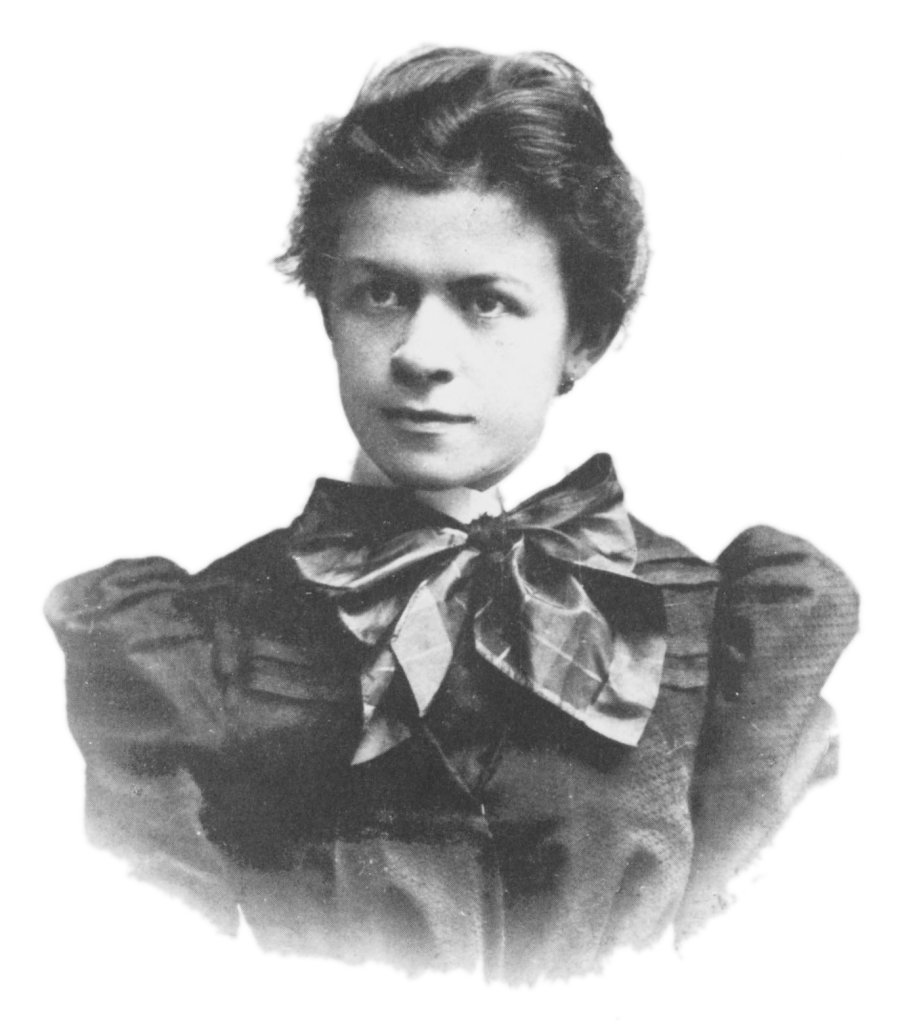
Marić in 1896

Whatever was Mileva’s actual contribution, we may never learn. Einstein submitted articles signed by his name only. Abram Ioffe claimed that “he saw the original three submission papers of the 1905 theory of relativity paper and said they were signed Einstein-Marity <Hungarian variant of Marić>. However, Marity was removed from the final publication” [3].

In 1912, Albert embarked on an affair with his first cousin, Elsa Einstein (Löwenthal). He forced Mileva to sign a humiliating contract [4, 5]:

  1. You will make sure:
    1. that my clothes and laundry are kept in good order;
    2. that I will receive my three meals regularly in my room;
    3. that my bedroom and study are kept neat, and especially that my desk is left for my use only.
  2. You will renounce all personal relations with me insofar as they are not completely necessary for social reasons. Specifically, You will forego:
    1. my sitting at home with you;
    2. my going out or travelling with you.
  3. You will obey the following points in your relations with me:
    1. you will not expect any intimacy from me, nor will you reproach me in any way;
    2. you will stop talking to me if I request it;
    3. you will leave my bedroom or study immediately without protest if I request it.
  4. You will undertake not to belittle me in front of our children, either through words or behavior.
“Mileva moved back to Zurich with her two sons on 29 July 1914. In 1919, she agreed to divorce, with a clause stating that if Albert ever received the Nobel Prize, she would get the money. <...> In 1925, Albert wrote in his will that the Nobel Prize money was his sons’ inheritance. Mileva strongly objected, stating the money was hers and considered revealing her contributions to his work” [1]. Here’s what her ex responded:
You made me laugh when you started threatening me with your recollections. Have you ever considered, even just for a second, that nobody would ever pay attention to your says if the man you talked about had not accomplished something important. When someone is completely insignificant, there is nothing else to say to this person but to remain modest and silent. This is what I advise you to do.
Albert to Mileva, 24 October 1925 [1]

References

  1. Gagnon, P. The forgotten life of Einstein’s first wife. Scientific American, 19 December 2016.
  2. Montero, R. Ella también. El País Semanal, 2 June 2019.
  3. Banovic, R. Does Albert Einstein’s first wife Mileva Maric deserve credit for some of his work? Independent, 13 June 2018.
  4. Smith, D. Dark side of Einstein emerges in his letters. The New York Times, 6 November 1996.
  5. Isaacson, W. Einstein: His Life and Universe. Simon & Schuster, New York, 2007.

Sunday, 28 April 2019

the power of wish to distort and deny

From the Foreword to the 1990 Edition of Awakenings by Oliver Sacks:

In the summer of 1970, then, in a letter to the Journal of the American Medical Association, I reported these findings, describing the total effects of L-DOPA in 60 patients whom I had maintained on it for a year. All of these, I noted, had done well at first; but all of them, sooner or later, had escaped from control, had entered complex, sometimes bizarre, and unpredictable states. These could not, I indicated, be seen as ‘side-effects,’ but had to be seen as integral parts of an evolving whole. Ordinary considerations and policies, I stressed, sooner or later ceased to work. There was a need for a deeper, more radical understanding.
My JAMA letter caused a furor among some of my colleagues. I was astonished and shocked by the storm that blew up; and, in particular, by the tone of some of the letters. Some colleagues insisted that such effects ‘never’ occurred; others that, even if they did, the matter should be kept quiet, lest it disturb ‘the atmosphere of therapeutic optimism needed for the maximal efficiency of L-DOPA.’ It was even thought, absurdly, that I was ‘against’ L-DOPA — but it was not L-DOPA but reductionism I was against. I invited my colleagues to come to Mount Carmel, to see for themselves the reality of what I had reported; none of them took up my invitation. I had not properly realised, until this time, the power of wish to distort and deny — and its prevalence in this complex situation, where the enthusiasm of doctors, and the distress of patients, might lie in unconscious collusion, equally concerned to wish away an unpalatable truth.

Friday, 29 June 2018

cheers, BEERx!

It’s been a while since a did a MOOC. But I just couldn’t resist doing The Science of Beer, a five-week course from the Wageningen University & Research. The best thing about this course, in my view, is that it was developed not by the academic staff but by the students of WUR. Apart from the videos and quizzes, there are optional “fun assignments” every week. Regretfully, I didn’t do any of them. (Why oh why?) My special regrets go to the first and probably most fun of the Fun Assignments, viz. Home Brewing, complete with this sweet disclaimer:

It is important to realise that this assignment involves the creation of an alcoholic beverage. It is possible for anyone to participate in this assignment, but please be aware that drinking or brewing an alcoholic beverage may be subject to laws and regulations in your country and can be hazardous. We cannot be held responsible for any consequences related to this assignment in any situation or circumstance. By continuing with this assignment, you agree to do so responsibly at your own risk.

No MOOC is perfect and this one is no exception. It being a student project, however, ensures that wabi-sabiness is practically built in. Whether or not a rerun of BEERx is planned, I highly recommend you checking it out. Currently the course is archived but the materials remain available to everybody.

Learning Outcomes

After successful completion of this course, the students will be able to:

  • identify the steps involved in the supply chain of beer and describe the scientific disciplines involved;
  • explain the effect of each step in beer production on the final product;
  • identify the main beer styles and explain how the production process can be designed to achieve their differences;
  • describe the characteristics and cultivation of the main raw materials of beer;
  • name the main historical events related to beer and explain how the image of beer changed in time;
  • explain how marketers try to influence consumer behaviour;
  • describe the pathway of beer through the human body after consumption;
  • discuss their own opinion on responsible drinking by looking at the health effects related to beer consumption.

Course structure

  • Module 1: Production - Processing and Categories
      This module covers three production topics: processing steps, process design and beer styles. During the processing, malt is produced, enzymes become active, chemical reactions take place, yeasts produce alcohol and flavour compounds, proteins are needed for foaming, and much more. Fun Assignment: Home Brewing.
  • Module 2: Production – Quality and Logistics
      This module focusses on the quality aspects involved in beer brewing. Also, it sheds light on the final steps of the production process: packaging and distribution. Fun Assignment: Beer Tasting.
  • Module 3: Raw materials of beer and cultivation practices
      This module goes back to the basics of beer. The students get a broader picture of the main ingredients and have a look at their characteristics and cultivation; discuss what defines a sustainable production, learn where beer comes from and explore important events in its history. Fun Assignment: Brewmasters through time (card game).
  • Module 4: Marketing of beer and cultural effects
      How are beers marketed? The students learn the essential activities in the process of bringing a beer onto the market. They also explore the world of advertising and discover the image of beer and how it changed over time. Fun Assignment: Advertisement.
  • Module 5: Consumption of beer and health effects
      The students follow the pathway that beer takes after it is consumed. They form their own opinion on responsible drinking, by comparing both positive and negative effects on the human health. Fun Assignment: Awareness.
  • Module 6: Recap and Exam
      This final module wraps up the course with a final exam.