Showing posts with label publishing. Show all posts

Sunday, 2 June 2019

our work on relative motion

“I need my wife. She solves for me all my mathematical problems”, Albert Einstein used to say [1]. What?

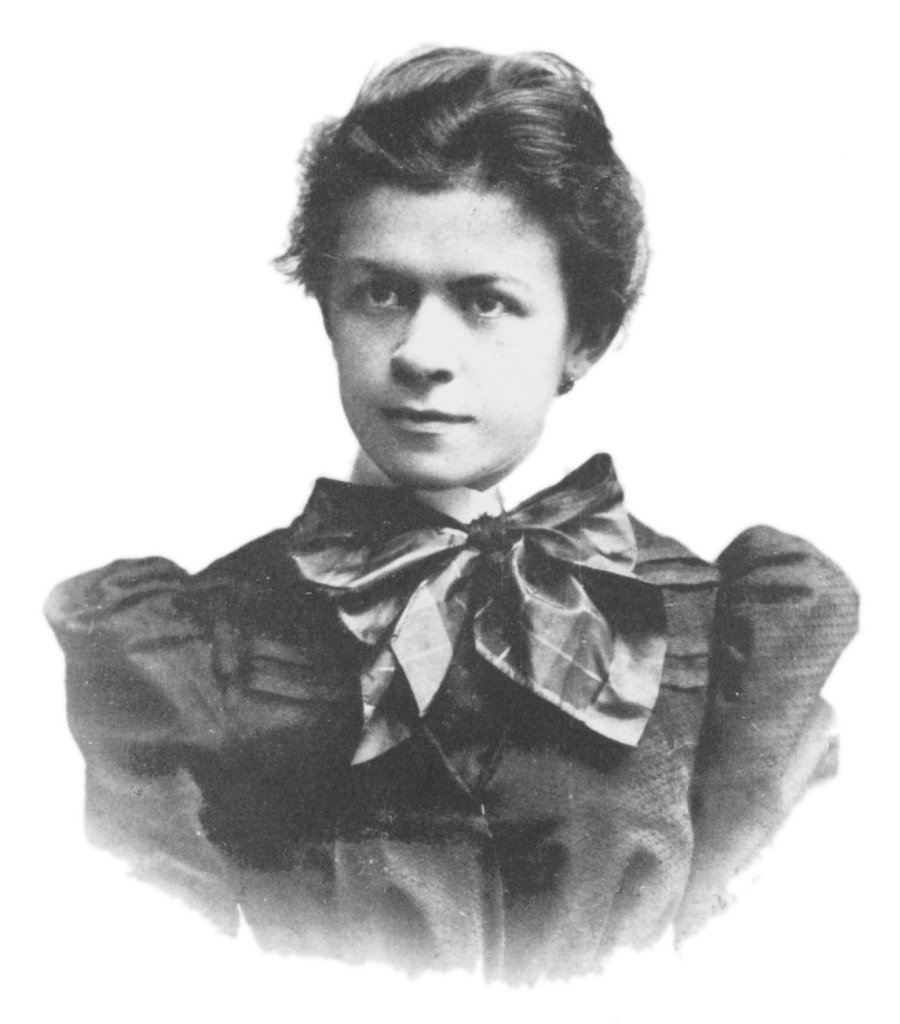
I have to admit that until today I knew literally nothing about Mileva Marić (1875—1948). It was thanks to publication of Rosa Montero in El País Semanal [2] that I looked her up. Her life was fascinating and tragic. Quite apart from being a brilliant mind, her husband was an ordinary asshole.

I look forward to resume our new common work. You must now continue with your research — how proud I will be to have a doctor for my spouse when I’ll only be an ordinary man.
Albert Einstein to Mileva Marić, September 1900 [1]
We will send a private copy to Boltzmann to see what he thinks and I hope he will answer us.
Mileva Marić to Helene Savić, 20 December 1900 [1]
How happy and proud I will be when the two of us together will have brought our work on relative motion to a victorious conclusion.
Albert to Mileva, 27 March 1901 [1]
<Michele Besso> visited his uncle on my behalf, Prof. Jung, one of the most influential physicists in Italy and gave him a copy of our article.
Albert to Mileva, 4 April 1901 [1]
Marić in 1896

Whatever was Mileva’s actual contribution, we may never learn. Einstein submitted articles signed by his name only. Abram Ioffe claimed that “he saw the original three submission papers of the 1905 theory of relativity paper and said they were signed Einstein-Marity <Hungarian variant of Marić>. However, Marity was removed from the final publication” [3].

In 1912, Albert embarked on an affair with his first cousin, Elsa Einstein (Löwenthal). He forced Mileva to sign a humiliating contract [4, 5]:

  1. You will make sure:
    1. that my clothes and laundry are kept in good order;
    2. that I will receive my three meals regularly in my room;
    3. that my bedroom and study are kept neat, and especially that my desk is left for my use only.
  2. You will renounce all personal relations with me insofar as they are not completely necessary for social reasons. Specifically, You will forego:
    1. my sitting at home with you;
    2. my going out or travelling with you.
  3. You will obey the following points in your relations with me:
    1. you will not expect any intimacy from me, nor will you reproach me in any way;
    2. you will stop talking to me if I request it;
    3. you will leave my bedroom or study immediately without protest if I request it.
  4. You will undertake not to belittle me in front of our children, either through words or behavior.
“Mileva moved back to Zurich with her two sons on 29 July 1914. In 1919, she agreed to divorce, with a clause stating that if Albert ever received the Nobel Prize, she would get the money. <...> In 1925, Albert wrote in his will that the Nobel Prize money was his sons’ inheritance. Mileva strongly objected, stating the money was hers and considered revealing her contributions to his work” [1]. Here’s what her ex responded:
You made me laugh when you started threatening me with your recollections. Have you ever considered, even just for a second, that nobody would ever pay attention to your says if the man you talked about had not accomplished something important. When someone is completely insignificant, there is nothing else to say to this person but to remain modest and silent. This is what I advise you to do.
Albert to Mileva, 24 October 1925 [1]

References

  1. Gagnon, P. The forgotten life of Einstein’s first wife. Scientific American, 19 December 2016.
  2. Montero, R. Ella también. El País Semanal, 2 June 2019.
  3. Banovic, R. Does Albert Einstein’s first wife Mileva Maric deserve credit for some of his work? Independent, 13 June 2018.
  4. Smith, D. Dark side of Einstein emerges in his letters. The New York Times, 6 November 1996.
  5. Isaacson, W. Einstein: His Life and Universe. Simon & Schuster, New York, 2007.

Sunday, 28 April 2019

the power of wish to distort and deny

From the Foreword to the 1990 Edition of Awakenings by Oliver Sacks:

In the summer of 1970, then, in a letter to the Journal of the American Medical Association, I reported these findings, describing the total effects of L-DOPA in 60 patients whom I had maintained on it for a year. All of these, I noted, had done well at first; but all of them, sooner or later, had escaped from control, had entered complex, sometimes bizarre, and unpredictable states. These could not, I indicated, be seen as ‘side-effects,’ but had to be seen as integral parts of an evolving whole. Ordinary considerations and policies, I stressed, sooner or later ceased to work. There was a need for a deeper, more radical understanding.
My JAMA letter caused a furor among some of my colleagues. I was astonished and shocked by the storm that blew up; and, in particular, by the tone of some of the letters. Some colleagues insisted that such effects ‘never’ occurred; others that, even if they did, the matter should be kept quiet, lest it disturb ‘the atmosphere of therapeutic optimism needed for the maximal efficiency of L-DOPA.’ It was even thought, absurdly, that I was ‘against’ L-DOPA — but it was not L-DOPA but reductionism I was against. I invited my colleagues to come to Mount Carmel, to see for themselves the reality of what I had reported; none of them took up my invitation. I had not properly realised, until this time, the power of wish to distort and deny — and its prevalence in this complex situation, where the enthusiasm of doctors, and the distress of patients, might lie in unconscious collusion, equally concerned to wish away an unpalatable truth.

Friday, 25 September 2015

academia is a weird thing

This is one of the best writings on research academia I’ve ever read.

P.S. 2021. It’s a shame about the author though.

This week, I resigned from my position at Duke University with no intent to solicit employment in state-funded academic research positions in any foreseeable future. Many reasons have motivated this choice, starting with personal ones: I will soon be a father and want to be spending time with my son at home.

Other reasons have to do with research academia itself. Throughout the years, I have been discovering more and more of the inner workings of academia and how modern scientific research is done and I have acquired a certain degree of discouragement in face of what appears to be an abandonment by my research community of the search for knowledge. I found scientists to be more preoccupied by their own survival in a very competitive research environment than by the development of a true understanding of the world.

Tuesday, 11 June 2013

adios, CopyrightX

To my great surprise, my review of 3.091x course became the most popular post of all time on this blog. That is to say, more than 365 pageviews. I know, it’s peanuts, but then I never expected this blog to be much visited in the first place. Let’s see if my 100th post (!) will be a hit.

HLS1x Copyright, aka CopyrightX, was the second edX course I took. Apart from the fact that these are both edX courses, there is very little in common between CopyrightX and 3.091x. I intend to continue with edX next academic year and look forward to surprises. Yet I dare to suggest that there is very little in common between CopyrightX and any other edX course.

To start with, one cannot simply, single-clickingly (is there such a word?) register for CopyrightX, like for any old edX course. No sir, you have to apply. This year class was limited to 500 participants. Mmm, I thought, intriguing. I just had to apply and see what happens next.

Wednesday, 17 April 2013

the book has no future

In his recent article in Chemistry International [1], Peter Atkins wrote:

The book has no future. Most of us who have been brought up surrounded by the tactile pleasure of paper books (p-books) have a sentimental attachment to them, relishing their feel, enjoying being curled up with them in their friendly presence, responding perhaps subconsciously to their smell, enjoying their instant access, finding it easy to browse, serendipitously opening a page and lighting on an enjoyable enlightenment. For those like us in this respect, there will always be paper books, just as there are vintage cars for enthusiasts. The rest of the world, however, will have moved on.

With all respect to the author of the classic Physical Chemistry textbook — the Russian translation of which I was using in my university days — I disagree. The printed book existed for hundreds of years and it will take more than advent of cheap e-book readers to make p-book extinct. It was predicted that compact discs will kill vinyl, then that DVD-Audio and Super Audio CD will kill CDs, and that mp3 downloads will render all of the above obsolete. Today very few people remember what DVD-Audio or SACD was all about, while vinyl sales are on the rise. (The only SACD I have is 30th Anniversary Edition of Dark Side of the Moon which I bought ten years ago and never had a chance to listen in all its 5.1 surround glory.)

If anything has no future, it is the traditional publishing model. The big publishing houses missed their many chances to make any meaningful contribution to e-books. Now, the main focus of Atkins’s article is on textbooks. He seems to be either unaware of the Open Access movement, or simply ignores it. He mentions some “wikitexts” but, amazingly, never names either Wikipedia, Wikibooks or Wikisource. Too bad. With all the wealth of free educational information on the Web, one must be mad to buy e-textbooks. In the meantime, the authors increasingly move to self-publishing. Who needs the middlemen?

Interestingly, in his earlier article on the same topic [2], Professor Atkins explained exactly why p-books will stay with us:

A p-book is a beautiful thing. It smells good when new, it generally looks good, and it has the virtue of serendipity, for casual browsing can bring the browser to an unexpected viewpoint. The approximate location of knowledge in books can be remembered, or at least half-remembered, for years. Books are life’s companions, and even the sight of a volume on a shelf can remind one of a special moment. But, most important of all, a p-book is “always on.” A book can be opened at a whim and immediately offers its contents to its reader. Books can be read in the brightest sunlight, on the balmiest beach, at almost any angle, in even the most bizarre bodily posture, for hours on end, even while one’s airplane is landing and taking off.

Printed matter is self-sufficient. You don’t need any device to read it. If hacker attacks destroy all Amazon Cloud services, or a hurricane plunges the cities into darkness, the books will still be there. If there are problems with sat nav reception or you forgot to charge the mobile phone, the map still can help. And so on.

But what the new generation think? My children love their PCs, Wii and MP3 players. I asked them today what they prefer, e-book or p-book. And the answer is: the real thing.

  1. Atkins, P. (2013) The future of the book. Chemistry International 35, 3—6.
  2. Atkins, P. (2009) Beyond the book. Chemistry International 31, 9—11.

Wednesday, 27 February 2013

jealousies and rivalries

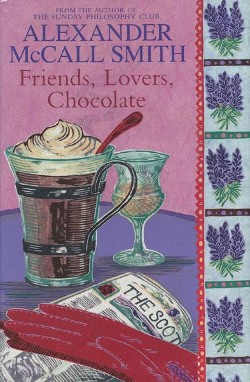
From Friends, Lovers, Chocolate by Alexander McCall Smith:
Isabel did not like her desk to get too cluttered, but that did not mean that it was uncluttered. In fact, most of the time there were too many papers on it, usually manuscripts that had to be sent off for peer assessment. She was not sure about the term peer assessment, even if it was the widely accepted term for a crucial stage in the publishing of journal articles. Sometimes the expression amounted to exactly that: equals looked dispassionately at papers by equals and gave their view. But Isabel had discovered that this did not always happen, and papers were consigned into the hands of their authors’ friends or enemies. This was unwitting; it was impossible for anybody to keep track of the jealousies and rivalries that riddled academia, and Isabel had to hope that she could spot the concealed agendas that lay behind outright antagonism or, more often, and more subtly, veiled antagonism: ‘an interesting piece, perhaps interesting enough to attract a ripple of attention.’ Philosophers could be nasty, she reflected, and moral philosophers the nastiest of all.

Saturday, 21 July 2012

editing the uneditable

My classes were not going that well. And so, some time last month, in a moment of weakness (which lasted couple of days actually), I sent a few job applications. To keep myself and my CV in shape. So to speak.

To my surprise, I got a human-written response from one of the companies straight away. The job was a freelance editor, and I was sent an editing exercise consisting of three “extracts from papers to be published in international journals”. One of them was in the area of biochemistry, another medicine, and third pharmacology. I was asked to edit at least one of the text(s) using the change tracking tool and mark my time.

It seems that I did underestimate the difficulty of the task. I chose one abstract only (biochemistry) hoping to complete the editing in one hour. In fact I spent more than three hours. Frankly, this was the worst piece of “scientific writing” (no I cannot omit the quotes) I ever seen. Yes I understand that English is not the author’s native language. Even so, I started to doubt whether it even was a real abstract. Maybe it was specifically designed to test editor’s ability to remain sane. Or maybe, as Tamara suggested, it was some sort of crowdsourcing exercise and the company never intended to hire anyone in the first place. I sent the completed task away and forgot about if for a while.

But let’s assume that these abstracts/extracts are real. It is my deep conviction that humankind would lose nothing if they were never published. If the authors are unable to formulate what is the point of their work, in whatever language, with or without external help, these texts shouldn’t even have reached the editorial office. Ever. Period.

To my surprise, one month later I got the response from the company thanking me for taking the test. The letter proceeded to say that, regrettably, the test did not meet their (unspecified) benchmark for freelancers and therefore they were unable to consider my application any further.

I should say that I feel relieved.

Wednesday, 4 August 2010

just some words

Three months ago, I started another “low-throughput” blog, just some words. I wanted to have not-Blogger blog. But why did I choose to host it on Maneno? First, Maneno is multi-lingual, and I want to have an option to publish in more than one language.

Friday, 14 August 2009

a threat to scientific communication

Once again, I am getting spammed by Nature — this time it is an email with a modest subject “Impact Factor confirms Nature is top research journal”. It informs me that its Impact Factor is 31.434 now. The reason they bother to send me this?

To celebrate we are offering you an exclusive 30% discount if you subscribe to Nature this week.

No thank you.